






How to Manually Open Your Garage Door Safely
Manually opening your garage door is a built-in safety feature on every modern automatic opener: manufacturers design it specifically for power outages, failed motors, and mechanical breakdowns. From the inside, the procedure takes under a minute. You can do it quickly. First, confirm the door is fully closed, then pull the red emergency release cord straight down, and lift the door by hand. Always put safety first.
If you are sitting in a dark garage because a North Texas storm knocked out your power, or you are standing outside in the July heat because your opener died, we cover every step: from the inside, from the outside, and how to secure the door once you are through. We also explain what to do when the door will not comply, because that is when you need clear answers.
The Federal Safety Standards Behind Your Manual Release
The capacity to manually disconnect a residential garage door from its opener carries the weight of federal law. Under 16 CFR Part 1211, the Safety Standard for Automatic Residential Garage Door Operators, every automatic residential opener sold in the United States must comply with strict entrapment protection requirements. This includes a mandatory manual detachment mechanism, as detailed in the CPSC Automatic Residential Garage Door Operators FAQ. This regulatory structure emerged from the Consumer Product Safety Improvement Act of 1990, which directed the CPSC to address a documented, escalating entrapment hazard, particularly for young children who could become trapped beneath a closing door.
Federal standards require that all automatic residential garage door operators manufactured on or after January 1, 1991, include a manually operated mechanism to detach the opener from the door. Manufacturers must also supply two separate labels: one near the wall switch explaining how to detach the operator and warning of injury risks, and a second label with step-by-step disconnection instructions, as outlined in the CPSC 1991 Safety Standard Announcement. Documented fatalities drive the urgency behind these rules. The danger was real. The CPSC tracked 46 confirmed deaths of children between ages two and 14 from March 1982 through December 1990. That figure climbed to 48 reported deaths by early 1992, according to the CPSC 1992 Proposed Rules, and reached 54 by late 1992, as the CPSC 1993 Final Rules Publication documents. Those numbers drove the regulatory changes that put a red cord in every garage built after 1991. It saves lives. For a broader look at how these requirements translate to everyday ownership, our garage door safety tips cover the full picture.
Step-by-Step Guide to Manually Opening Your Garage Door from the Inside
Before you touch the release cord, one rule takes priority over everything else: the garage door must be fully closed. The physics behind this is simple. If you pull the red emergency release cord while the door is open or partially raised, and the springs are broken or unbalanced, the heavy steel door will drop instantly under its own weight. The spring does the heavy lifting: it makes a 150-pound door feel like it weighs nothing. Pull the cord with the door open, and you remove the only thing holding it up. The result is a door coming down with full force, no warning, and no way to stop it.
Once you confirm the door is fully closed, follow these steps:
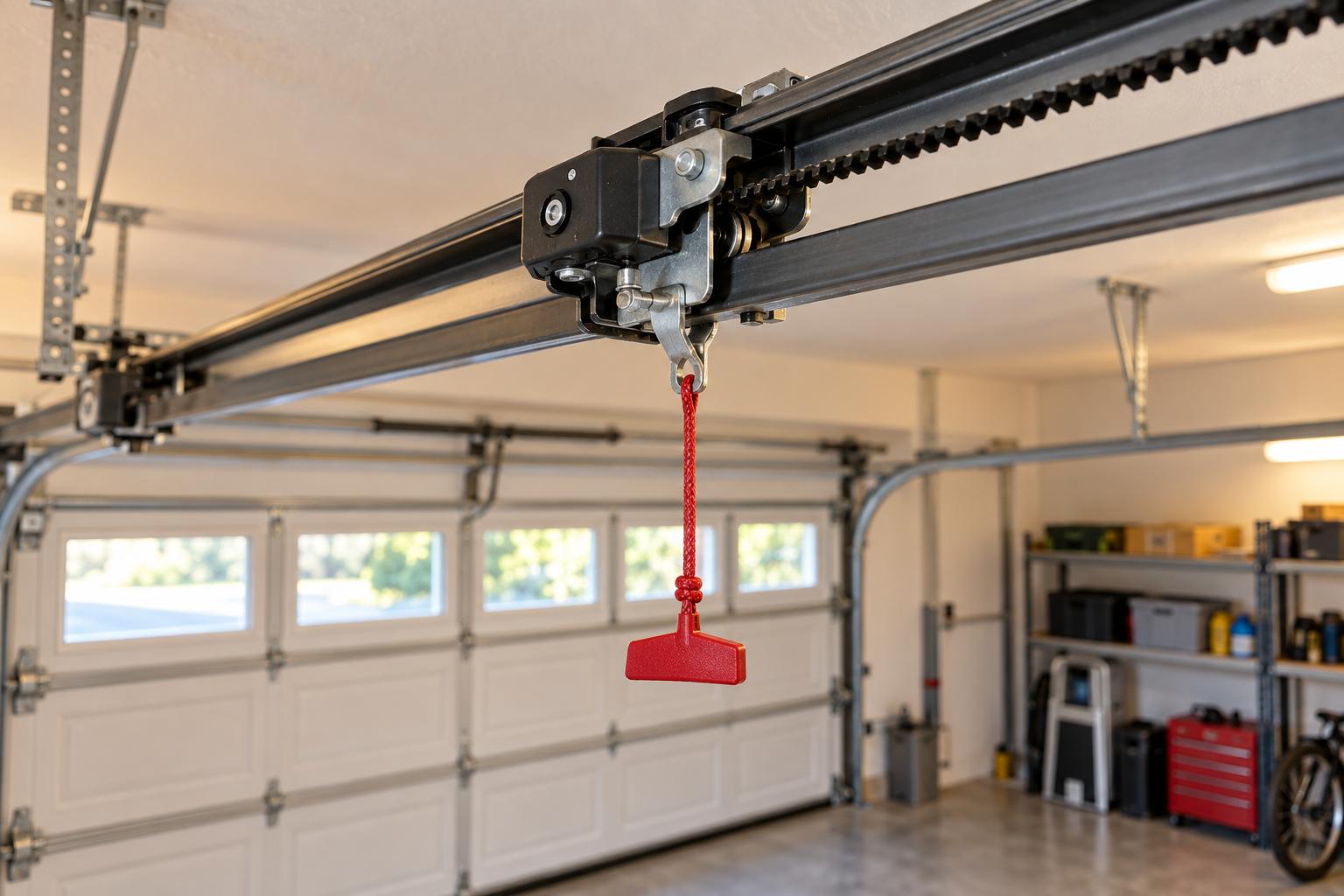
- Locate the emergency release cord: Find the red rope with a red plastic handle hanging from the trolley carriage along the center rail of the opener track. Federal law requires every opener built after January 1, 1991, to have one.
- Pull the cord straight down: Grip the red handle and pull it firmly straight down, not backward and not forward. You will feel the trolley carriage disengage from the drive mechanism with a distinct click.
- Lift the door manually: Grip the bottom edge or the designated lift handles and raise the door straight up. A correctly counterbalanced door lifts smoothly and requires minimal effort.
- Secure the door open: Raise the door completely before moving your vehicle. Never leave a manually opened door stopped halfway up. Without the opener holding it, it can slide back down without warning.
If you pull the release cord and the door feels unyielding, or it crashes down the moment you ease your grip, stop immediately. That kind of weight indicates a broken torsion spring or a snapped cable. Forcing it risks serious injury. Call Denton Overhead Door at 940-260-3351. We offer same-day service across Denton County with clear pricing and no hidden fees. Schedule an emergency garage door repair, and we will have it working safely the same day.
How to Manually Open Your Garage Door from the Outside
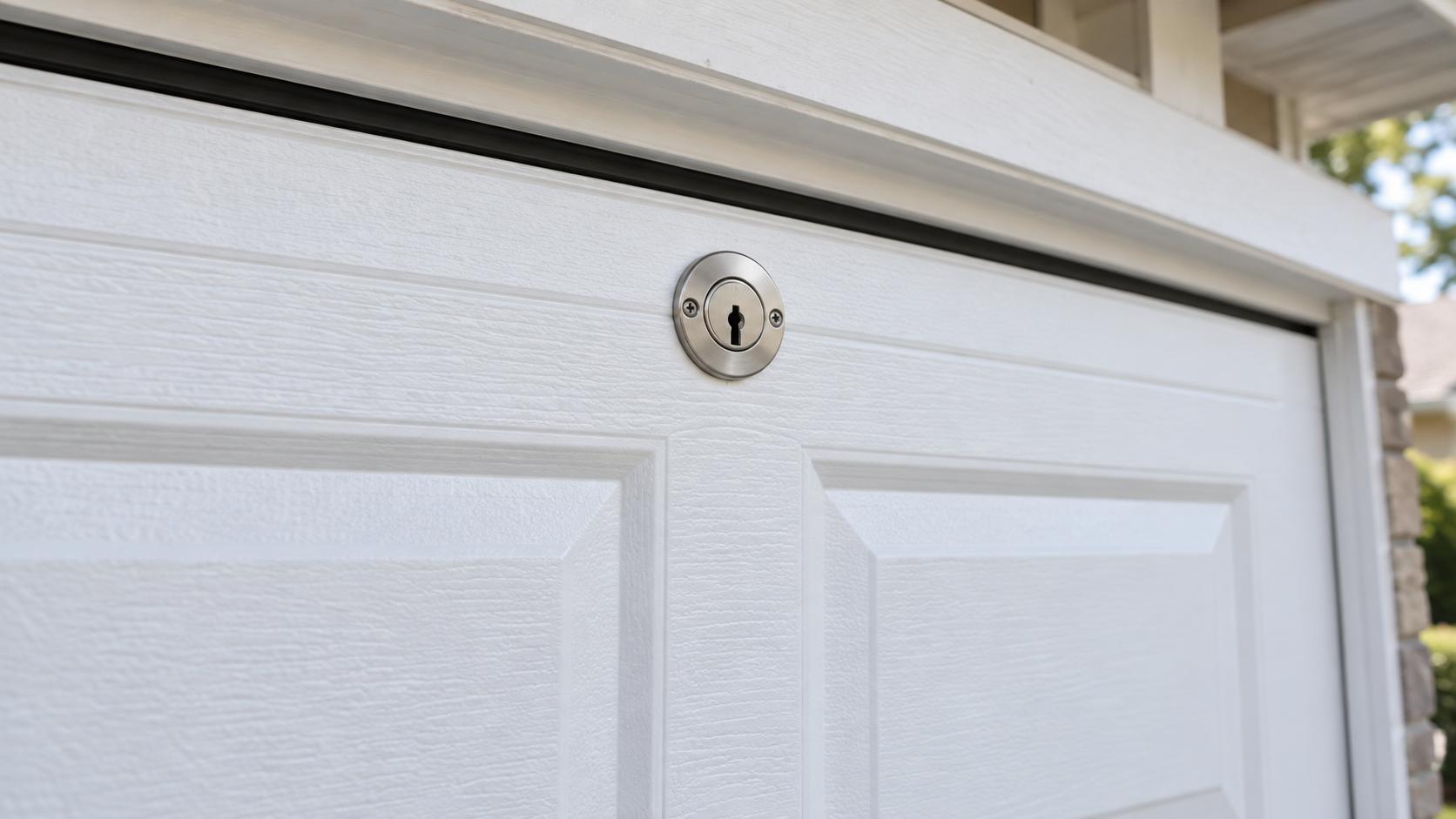
Opening a garage door manually from the outside necessitates an external emergency release kit: a small lock cylinder that sits near the top center of the door panel. When you insert the key and turn it, the mechanism draws an internal cable connected directly to the trolley’s manual release lever, disengaging the automatic motor without you ever needing to step inside the garage. These kits fall within the category of garage door accessories that improve your home’s accessibility during emergencies. Without one installed, and without a separate entry door into the garage, there is no safe way to open the door from the outside. You are locked out. Wedging tools into the gap at the top of the door to fish for the internal release cord is nearly impossible. Doing so almost always destroys the top panel or the opener’s gear system in the process.
Encountering common garage door problems during manual operation often reveals itself through the door’s physical weight. A double-car garage door is exceedingly heavy, making it impossible to lift safely without the spring system absorbing its load. Springs do for your door what a counterweight does for an elevator: they take on the mass so you only manage the difference. When a torsion or extension spring snaps, that counterbalance vanishes. The door becomes dead weight. Attempting to lift the door alone at that point is dangerous, and the door can drop without warning if your grip gives out.
If you have an external emergency release kit installed, here are the steps:
- Insert the key: Place your emergency release key into the lock cylinder on the top section of the garage door.
- Turn and pull: Turn the key to unlock the cylinder, then pull the entire lock tumbler straight out from the door.
- Trigger the release: Pulling the tumbler draws an internal cable that disengages the trolley’s manual release lever inside the garage, disconnecting the motor.
- Lift the door: Use the external handles to raise the door manually and slide it fully up into the tracks before passing through.
Re-engaging Your Garage Door Opener Safely
Once utility crews restore power or we repair your opener, reconnecting the door to automatic operation is uncomplicated. The trolley carriage has a spring-loaded lever that snaps back into the opener’s drive chain or belt when seated correctly. To do this, pull the red manual release cord back toward the motor unit, or forward toward the door, depending on your specific opener model, until the spring-loaded lever flips back into its active position. Then run the opener with your remote or wall button. Listen for the click. The trolley will travel along the rail and click back into the drive mechanism on its own.
Two things to avoid during re-engagement: never attempt it while the door is in motion, and never try to force the lever while the motor is actively running. The click you feel when the carriage locks back in is the assurance you need. That click is vital. If you do not feel or hear that click, the trolley will not re-engage, and the door will not operate automatically. Running the opener repeatedly without that click will not fix it and can strain the motor.
Regular maintenance keeps your manual release and all connected safety mechanisms from seizing up when you actually need them. Think of it like changing your car’s oil: skipping it does not break things immediately, but it speeds up wear across the whole system. Call Denton Overhead Door at 940-260-3351 to schedule a safety inspection. Our team will check your springs, cables, and manual release mechanisms to confirm everything is fully functional. We offer clear pricing with no hidden fees and same-day service whenever possible.
Denton County homeowner Judy Gore described her experience: “Came out the same day to assess the problem. Got the parts and came back out the next morning. Installed an entire new motor and 2 new pads and reprogrammed my car all in about 1hr. Cayden was very kind and cleaned up afterwards very well. We’ve used this company before and will continue to use them.”
Securing Your Home After Manual Operation
An automatic opener does more than move your door: it also holds it down against lifting from the outside. In manual mode, that holding force is gone. Your home is vulnerable. Anyone can walk up and raise the door by hand unless you take intentional steps to lock it down.
- Lock the door manually: Slide the physical lock bar on the side of the door into the track. When you disengage your opener, you bypass the motor’s locking mechanism entirely, making the lock bar your only mechanical barrier.
- Use track clamps for temporary security: If your door lacks a slide lock, clamp a pair of locking pliers (vice grips) to the track directly above one of the rollers. This physically blocks the door from being lifted from the outside.
- Secure the tracks during outages: Know how to manually open a garage door and secure it correctly during extended outages. This is especially important in Denton County, where severe weather can knock out power for days at a stretch.
- Test the lock before leaving: Physically attempt to lift the door from the outside. Verify that your lock bar or clamps are holding before you walk away from the property.
Manual operation is one layer of a modern garage door’s safety ecosystem. Federal rules also mandate automatic reversing: a closing door must reverse its downward motion within two seconds of contacting a two-inch high test block placed on the floor. The mechanism must also re-open the door within 30 seconds of starting downward if it senses the door has not fully closed. Openers manufactured on or after January 1, 1993, must additionally feature either an external entrapment protection device, such as a photoelectric electric eye or a door edge sensor, or a constant contact control button that requires continuous physical pressure to fully close the door. All of these systems deteriorate with age and use. They need regular testing. The CPSC advises homeowners to test the reversing feature monthly. That cadence exists for a reason: a system that worked last year may not work today.
Frequently Asked Questions About Manual Garage Door Operation
How do I get my garage door out of manual mode?
To get your door out of manual mode, pull the manual release cord toward the motor unit, or back toward the door, depending on your opener model, to flip the release lever back into its active position. Then run the opener using your remote or wall button. The trolley carriage will travel along the rail and click back into the drive chain or belt, re-establishing automatic operation. If the carriage does not re-engage on the first pass, run the door through a full open-and-close cycle; the trolley often seats itself during movement.
Can someone open your garage door from the outside if it is in manual mode?
Yes. When you disengage the door from the opener, the motor no longer holds the door down. Anyone can lift it by hand unless you’ve engaged the physical slide locks on the inside of the door tracks. During a power outage, always slide the manual lock bar into the track or clamp locking pliers above a roller to prevent unpermitted entry. An unlocked door in manual mode offers no resistance to someone who knows what they’re doing.
How often should I test my garage door’s safety reversing features?
The CPSC strongly advises homeowners to test their garage door openers monthly to verify that the reversing feature is functioning correctly. Place a two-inch-high object on the floor in the door’s path and close the door: it should reverse within two seconds of contact. If the door fails to reverse, adjust it per the owner’s manual or contact a professional technician immediately. Waiting to see if the problem resolves on its own is not a safe approach with a safety-critical system.
What should I do if my garage door is too heavy to lift manually?
Do not force it. A correctly counterbalanced door lifts easily with one hand. Extreme weight points to a broken torsion or extension spring, or a snapped cable. When cables start to fray, they are one stress event away from snapping. A door with a failed spring can drop without warning the moment you release pressure. Contact a professional repair service immediately rather than attempting repeated lifts.
Can I manually open my garage door from the outside if there is no power and I don’t have a key?
If you lack an external emergency release key kit and have no other entry door into the garage, you cannot safely open the door from the outside without professional help. Attempting to wedge tools into the top of the door to grab the internal release cord is exceptionally difficult and typically causes severe damage to the door panels and tracks. That damage often costs more to repair than the service call would have.
Knowing how to operate your manual release is a practical home safety skill that earns its value most during severe North Texas storms that knock out power across Denton County for hours. The steps themselves are manageable. The risk surfaces when the underlying hardware, springs, cables, or the release mechanism itself, is already compromised before you ever pull the cord. Frayed cables and broken springs change the physical reality of the door entirely. When the door will not lift, or drops the moment you ease your grip, a broken spring or failed cable is the most likely cause. That is a repair that belongs in professional hands. Our full garage door services cover every residential and commercial need in Denton County, from emergency repairs to full safety inspections, so expert help is always within reach when you need it.
Do not let a stuck or broken garage door disrupt your day or leave your home unsecured. Call Denton Overhead Door at 940-260-3351 for same-day service with clear pricing and no hidden fees. We serve homeowners and businesses across Denton County. Get a free estimate from our family-owned team. We are here to help 24/7.
Categorised in: Garage Door Openers