





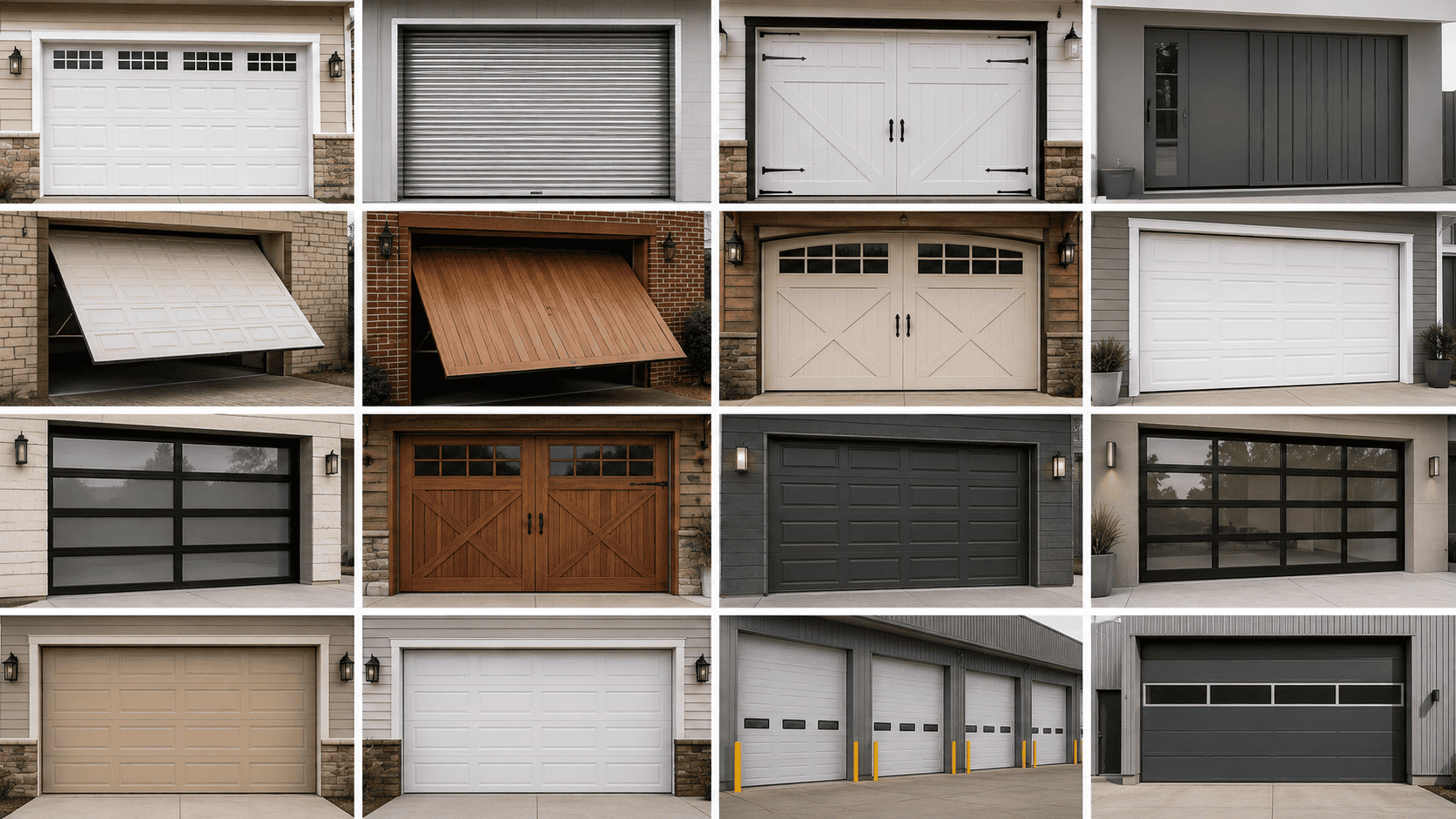
Types of Garage Doors
When homeowners and business owners compare the different types of garage doors, it is important to look beyond appearance alone. A garage door affects curb appeal, security, energy efficiency, daily convenience, property value, and long-term maintenance needs. Whether you are replacing an outdated residential door, selecting a door for a new construction project, or upgrading a commercial overhead system, understanding the most common garage door styles and materials can help you make a confident decision. The right garage door should match your property, support your budget, and perform reliably for years.
Garage doors are available in many designs, materials, and operating systems. Some are built for classic residential style, while others are made for heavy-duty commercial use. Some prioritize insulation and quiet operation, while others focus on durability, security, or low maintenance. Below, we will break down the most popular garage door types, how they work, and what to consider before choosing one.
Sectional Garage Doors
Sectional garage doors are one of the most common options for homes and businesses. These doors are made of several horizontal panels connected by hinges. As the door opens, the panels move along a track and rest overhead, parallel to the ceiling.
This design is popular because it is practical, space-saving, and available in many styles. Sectional garage doors work well for attached garages, detached garages, workshops, warehouses, and service bays. They can be made from steel, aluminum, wood, fiberglass, or composite materials.
Common benefits of sectional garage doors include:
- Efficient use of space
- Wide range of design options
- Compatibility with automatic openers
- Good insulation options
- Strong security when properly installed
- Easy panel replacement if one section is damaged
A sectional garage door is often a smart choice for property owners who want a dependable and versatile door. It can be customized with windows, decorative hardware, insulation, and different colors to match the property’s exterior.
Roll-Up Garage Doors
Roll-up garage doors are commonly used in commercial and industrial settings, although some residential properties also use them. Instead of sliding along overhead tracks in sections, these doors coil into a compact roll above the opening.
Roll-up doors are built for durability and frequent use. Many are made from steel or aluminum slats, making them ideal for storage facilities, loading docks, warehouses, auto shops, and storefronts.
Roll-up garage doors are useful when ceiling space is limited because they do not require long horizontal tracks. They are also known for their strength and security.
Key advantages include:
- Compact design
- Strong protection against forced entry
- Good choice for commercial properties
- Designed for frequent operation
- Minimal overhead space requirements
- Durable construction
Because roll-up doors are often used in demanding environments, professional installation and regular maintenance are especially important. Springs, tracks, slats, and operators should be inspected to prevent operational issues and safety concerns.
Side-Hinged Garage Doors
Side-hinged garage doors have a traditional swing-open design. They operate similarly to large double doors, opening outward from a central split. This style is often chosen for older homes, carriage house designs, workshops, and garages that are used more for storage than parking.
These doors can be made from wood, steel, composite, or fiberglass. They are especially convenient when you want quick access to the garage without opening the entire overhead door system.
Side-hinged garage doors may be a good fit if:
- You prefer a traditional appearance
- You use the garage as a workshop or storage area
- You want pedestrian-style access
- Your garage ceiling has limited clearance
- You do not want tracks running across the ceiling
However, side-hinged doors need enough driveway space to swing outward. They may not be ideal for sloped driveways or areas where vehicles park very close to the garage opening. Proper weather sealing is also important to help keep out rain, dust, and pests.
Slide-to-the-Side Garage Doors
Slide-to-the-side garage doors operate by moving horizontally along a wall instead of lifting overhead. This style is less common than sectional or roll-up doors, but it can be an excellent solution for garages with unusual ceiling designs, low headroom, or obstructions.
These doors usually consist of vertical sections that bend around the corner and slide along a side wall. They are easy to operate and can be automated in many cases.
Benefits of slide-to-the-side garage doors include:
- Good option for garages with low ceilings
- No need for overhead tracks
- Convenient partial opening
- Unique and functional design
- Useful for garages with ceiling storage or fixtures
This type of garage door is best installed by an experienced professional because track alignment is critical. If the track system is not properly installed, the door may stick, drag, or become difficult to operate.
Tilt-Up Canopy Garage Doors
Tilt-up canopy garage doors are made from one solid panel. When opened, the door tilts outward and upward, leaving part of the door projecting outside the garage like a canopy. This design was more common in older homes but is still used in some residential settings.
These doors are simple in appearance and can be cost-effective. They do not use multiple hinged sections, which gives them a clean, uninterrupted look.
Advantages may include:
- Simple design
- Classic appearance
- Fewer panel joints
- Potentially lower upfront cost
- Suitable for certain traditional home styles
However, tilt-up canopy doors require clearance in front of the garage because the door swings outward during operation. They may not be the best choice for short driveways or properties where vehicles park close to the garage. They may also offer fewer insulation and automation options than modern sectional doors.
Tilt-Up Retractable Garage Doors
Tilt-up retractable garage doors are also made from one solid panel, but they fully retract into the garage when opened. Unlike canopy doors, they do not leave a portion of the door extending outside once fully open.
These doors are often smoother to operate than canopy models and can be compatible with automatic openers. They still require space in front of the garage during operation, but they may provide a cleaner overhead position when open.
Tilt-up retractable garage doors can work well for property owners who like the look of a single-panel door but want a more refined operating system. Professional installation is important because the door’s weight, springs, and tracks must be properly balanced for safe use.
Carriage House Garage Doors
Carriage house garage doors are inspired by historic carriage house doors. They often look like side-swinging doors but operate like modern overhead sectional doors. This gives homeowners the charm of a traditional design with the convenience of modern functionality.
Carriage house doors are especially popular for homes with classic, farmhouse, craftsman, or rustic architecture. They often include decorative handles, hinges, window panels, and wood-look finishes.
Common design options include:
- Faux wood finishes
- Decorative window inserts
- Crossbuck panel designs
- Iron-style hardware
- Insulated steel construction
- Custom colors and stains
Carriage house garage doors are a great choice when curb appeal is a top priority. They can dramatically improve the appearance of a home while still offering the performance and security of a modern garage door system.
Traditional Raised-Panel Garage Doors
Raised-panel garage doors are another popular residential choice. They feature rectangular panels that add depth and dimension to the door’s surface. This style works well with many home designs, from traditional to suburban to transitional.
Raised-panel doors are commonly made from steel, but they may also be available in wood, fiberglass, or composite materials. They can be painted in many colors and paired with window options for added style.
Homeowners often choose raised-panel doors because they are:
- Versatile
- Widely available
- Cost-effective
- Compatible with insulation
- Easy to coordinate with many home styles
- Available in short-panel and long-panel designs
This door type is a dependable option for homeowners who want a clean, classic look without choosing a highly customized design.
Contemporary Garage Doors
Contemporary garage doors are designed for modern architecture. They often feature clean lines, large glass panels, aluminum frames, flush panels, or minimalist finishes. These doors are popular on modern homes, luxury properties, and commercial buildings with sleek exterior designs.
Materials commonly used for contemporary garage doors include aluminum, glass, steel, and composite panels. Frosted or tinted glass can provide privacy while allowing natural light into the garage.
Benefits of contemporary garage doors include:
- Modern curb appeal
- Customizable glass and frame options
- Natural light
- Clean architectural appearance
- Lightweight material choices
- Strong visual impact
While contemporary glass and aluminum doors can be beautiful, they may require special consideration for insulation, privacy, and maintenance. For example, glass panels may need regular cleaning, and certain designs may not provide the same insulation value as heavily insulated steel doors.
Wood Garage Doors
Wood garage doors offer natural beauty and timeless appeal. They can be crafted in traditional, carriage house, rustic, or custom designs. Wood is often chosen for high-end homes or properties where appearance is a major priority.
Popular wood choices include cedar, redwood, mahogany, and hemlock. Wood doors can be stained or painted to match the home’s exterior.
Advantages of wood garage doors include:
- Warm, natural appearance
- Custom design potential
- Strong curb appeal
- Excellent fit for traditional and luxury homes
- Ability to refinish over time
However, wood requires more maintenance than many other materials. It may need periodic sealing, staining, or painting to protect it from moisture, sun exposure, warping, and cracking. Wood doors can also be heavier than steel or aluminum doors, so the spring system and opener must be properly matched to the door.
Steel Garage Doors
Steel garage doors are among the most popular options because they offer strength, affordability, and design flexibility. They are available in many panel styles, colors, insulation levels, and finishes. Some steel doors are designed to mimic the appearance of wood without requiring the same level of maintenance.
Steel garage doors are a practical choice for both residential and commercial properties. They resist many common forms of damage, and insulated steel doors can help improve comfort and energy efficiency.
Benefits of steel garage doors include:
- Strong and durable construction
- Wide range of styles
- Lower maintenance than wood
- Good insulation options
- Suitable for many budgets
- Long-lasting performance with proper care
One thing to consider is that lower-grade steel may dent if impacted. Choosing a higher-quality steel door or a reinforced model can improve durability, especially in busy households or commercial environments.
Aluminum Garage Doors
Aluminum garage doors are lightweight, corrosion-resistant, and often used in modern designs. They are especially popular for full-view glass doors with aluminum frames. Because aluminum resists rust, it can be a good option in humid climates or areas where corrosion is a concern.
Aluminum doors are easier on springs and openers because of their lighter weight. However, they may be more prone to dents than steel, depending on the thickness and construction.
Aluminum garage doors are often chosen for:
- Modern homes
- Commercial storefronts
- Glass-panel designs
- Lightweight operation
- Rust resistance
- Sleek curb appeal
For property owners who want a clean, modern look, aluminum can be an excellent option.
Fiberglass Garage Doors
Fiberglass garage doors are lightweight and resistant to moisture, insects, and salt air. They can be designed to look like wood while offering better resistance to certain environmental conditions. Fiberglass is sometimes used in coastal areas because it does not rust.
These doors can be a good option for homeowners who want a low-maintenance material with attractive design flexibility. However, fiberglass may become brittle in extremely cold climates and may not offer the same impact resistance as steel.
Fiberglass doors may be a good fit when you want:
- Moisture resistance
- A wood-look appearance
- Lightweight operation
- Low maintenance
- Resistance to insects and rot
A professional can help determine whether fiberglass is suitable for your climate and property needs.
Vinyl Garage Doors
Vinyl garage doors are known for durability and low maintenance. They resist dents, rust, rot, and corrosion, making them a practical choice for busy households. Vinyl doors are often built with steel frames and insulation, which improves strength and energy performance.
These doors are sometimes called kid-friendly because they can hold up well against bumps and everyday wear. They are available in several colors and designs, although customization may be more limited than with steel or wood.
Benefits of vinyl garage doors include:
- Low maintenance
- Dent resistance
- Rust resistance
- Good durability
- Suitable for family homes
- Strong weather resistance
Vinyl can be a practical option if you want a garage door that looks good and does not require frequent upkeep.
Insulated Garage Doors
Insulated garage doors are available in several materials and styles. The main difference is that they include insulation between door layers. This can help regulate garage temperature, reduce noise, and improve overall comfort.
Insulated doors are especially useful if:
- Your garage is attached to your home
- You use the garage as a workshop
- You store temperature-sensitive items
- You want quieter door operation
- You want to improve energy efficiency
- You live in an area with hot summers or cold winters
Insulation is commonly measured by R-value. A higher R-value generally means better resistance to heat transfer. However, the best insulation level depends on your climate, garage use, and budget.
Commercial Garage Doors
Commercial garage doors are built for businesses, warehouses, service centers, industrial buildings, storage facilities, and retail properties. These doors are often larger, stronger, and more durable than standard residential doors.
Common commercial options include:
- Rolling steel doors
- Sectional steel doors
- Fire-rated doors
- High-speed doors
- Loading dock doors
- Security grilles
- Full-view aluminum doors
The right commercial garage door depends on the business operation. A warehouse may need a durable overhead sectional door, while a storefront may need a glass full-view door or security grille. Businesses that rely on frequent access may benefit from high-cycle springs, heavy-duty tracks, and commercial-grade operators.
How to Choose the Right Garage Door
Choosing the right garage door requires balancing appearance, performance, budget, and long-term maintenance. Before making a decision, consider how the door will be used and what matters most for your property.
Important factors include:
- Property type: Residential and commercial doors have different requirements.
- Door material: Steel, wood, aluminum, fiberglass, and vinyl each offer different benefits.
- Insulation: Insulated doors can improve comfort and reduce noise.
- Style: The door should complement the property’s exterior.
- Security: Strong materials and quality hardware help protect your property.
- Maintenance: Some materials require more care than others.
- Budget: Consider both upfront cost and long-term value.
- Opener compatibility: Not every door works with every opener.
- Climate: Weather conditions can affect material performance.
- Professional installation: Proper installation affects safety, reliability, and lifespan.
A garage door is a major moving system, not just an exterior feature. Springs, cables, rollers, tracks, panels, openers, and safety sensors must work together correctly. That is why professional guidance is valuable when selecting, installing, repairing, or maintaining any garage door type.
Why Professional Garage Door Service Matters
Even the best garage door can fail if it is poorly installed or neglected. A door that is out of balance, off track, damaged, or connected to worn springs can become a safety hazard. Professional garage door technicians can identify issues early and provide the right solution before small problems become major repairs.
Professional garage door service can help with:
- Broken springs
- Damaged panels
- Noisy operation
- Door balance issues
- Misaligned tracks
- Worn rollers
- Broken cables
- Opener problems
- Sensor issues
- Weather seal replacement
- Preventive maintenance
- New door installation
Regular maintenance can extend the life of your garage door system and help prevent unexpected breakdowns. For businesses, timely service can also reduce downtime and protect daily operations.
FAQ
What is the most common type of garage door?
Sectional garage doors are the most common because they are reliable, space-saving, and available in many styles.
What type of garage door is best for homes?
Sectional steel garage doors are a popular residential choice because they are durable, affordable, and customizable.
What type of garage door is best for businesses?
Roll-up and commercial sectional doors are often best for businesses because they are strong and built for frequent use.
Are insulated garage doors worth it?
Yes. Insulated garage doors can improve comfort, reduce noise, and help with energy efficiency, especially for attached garages.
Which garage door material lasts the longest?
Steel and vinyl doors are known for long-lasting performance with relatively low maintenance.
Are wood garage doors high maintenance?
Yes. Wood garage doors usually require regular sealing, staining, or painting to protect them from weather damage.
Can any garage door be repaired?
Many garage doors can be repaired, but severe structural damage or old, unsafe systems may require replacement.
How do I know which garage door is right for my property?
Consider your budget, style preferences, insulation needs, security concerns, maintenance expectations, and how often the door will be used.
Can garage doors be customized?
Yes. Many garage doors can be customized with colors, windows, insulation, decorative hardware, panel designs, and specialty finishes.
Should I install a garage door myself?
Professional installation is recommended because garage doors are heavy, complex, and can be dangerous if installed incorrectly.
Call Denton Overhead Door & Garage Door Repair Today
No matter which garage door style you have or want to install, we are ready to help. We have provided home and business owners with trusted garage door services for 35 years. Our experienced team handles repairs, maintenance, and installations for all types of doors and manufacturers. We are known for same-day service, honest and affordable rates, and dependable expertise. Whether your garage door is damaged, noisy, outdated, off track, or ready for a complete replacement, we can provide the professional service you need. Call us now for a free estimate or consultation for your garage door repair or installation.
Categorised in: Garage Doors